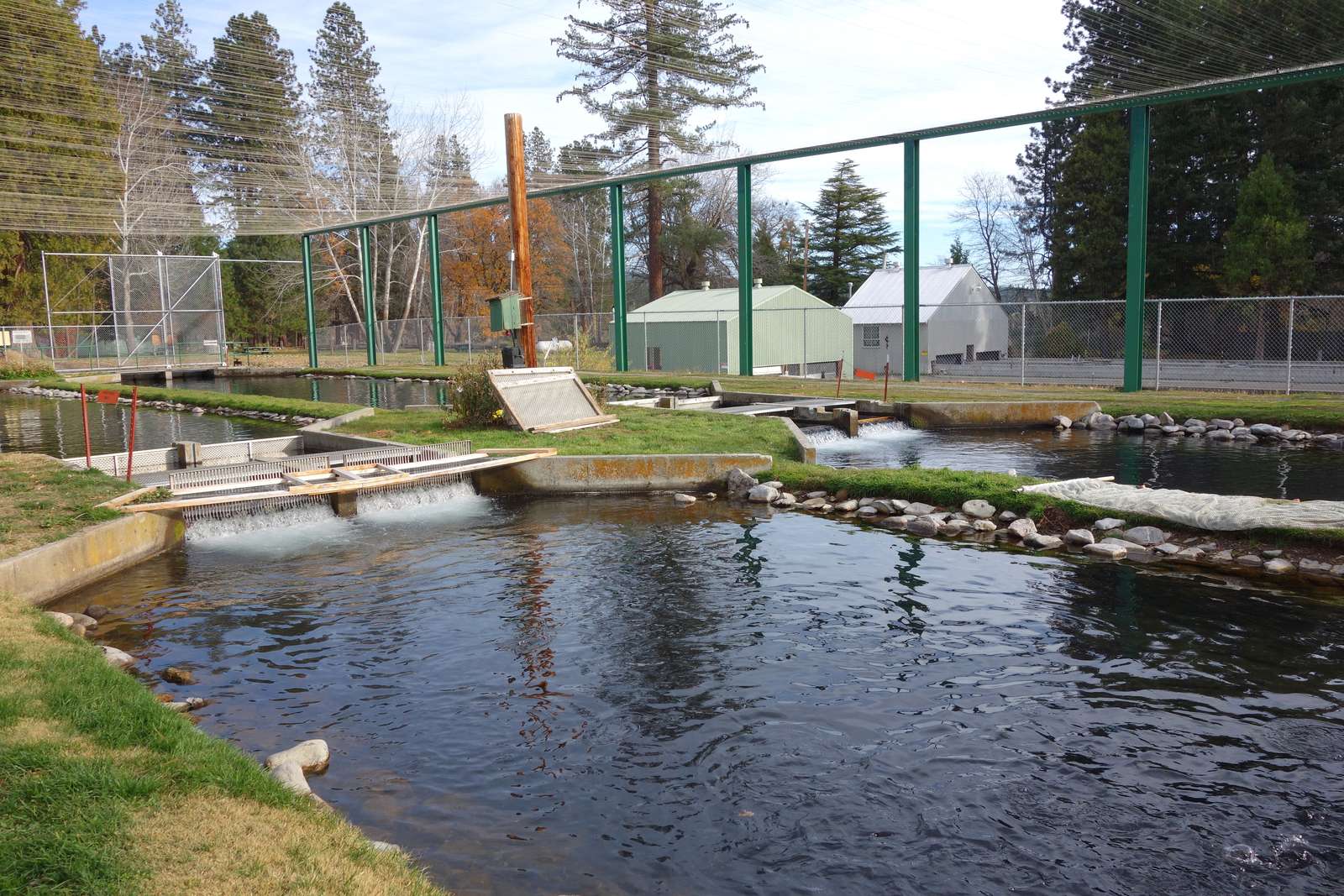
If you want an easy outing in Mount Shasta this fall or winter that does not need snow gear or a long drive, go to the Mount Shasta Fish Hatchery. It is right in town, on the west side of Interstate 5. The California Department of Fish and Wildlife (CDFW) calls it the oldest trout hatchery west of the Mississippi, opened in 1888. You can walk the ponds, take a short nature trail and, on open days, step into the Mount Shasta Sisson Museum next door.
Where is the Mount Shasta Fish Hatchery?
The hatchery is at 3 North Old Stage Road, Mount Shasta, CA 96067. CDFW's directions: from I-5, take the central Mount Shasta exit and head west on Lake Street, which turns into Hatchery Lane. At Old Stage Road, go straight across into the hatchery parking lot.
From our cafe on Chestnut Street downtown, that makes it a quick drive across the freeway. It pairs well with a slow morning in town or a short stop on a travel day.
When is it open, and does it cost anything?
CDFW lists the hatchery's hours as 8am to 3pm. There are picnic tables on site. Hours can change, so if your plans depend on it, call the hatchery at (530) 926-2215 before you go.
The Mount Shasta Sisson Museum is free to enter (it asks for donations). Its website says it is open Thursday through Monday, 10am to 4pm, closed Tuesdays and Wednesdays, and that its season typically runs from late March through December, weather permitting. Late in the year, check the museum's site or call (530) 926-5508 before you plan around it.
What can you see at the hatchery?
The outdoor ponds and raceways are the main draw. CDFW says the brood stock fish there can grow to nearly 10 pounds. According to CDFW, the hatchery supplies most of the eggs for the state's trout hatcheries, upwards of 30 million eggs a year.
If you want to see eggs hatching and young fish (fry) being raised in Hatchery Building B, CDFW says to come from mid-March through July. In fall and winter, plan on the ponds, the grounds and the trail instead.
For a short walk, CDFW points visitors to the Elsa Rupp Trail, which leads to a nature area that was donated to the Department of Fish and Game in 1973.
What is the history behind the hatchery and the Sisson Museum?
CDFW's history page says that possibly as early as 1877, Justin H. Sisson, who owned a local inn and tavern, raised trout and salmon here to draw visitors. The California Fish Commission bought the hatchery in 1888. Once Shasta Dam went in on the upper Sacramento River (construction began in 1938), salmon could no longer reach the hatchery, and it switched to other species.
Hatchery Building A was built in 1909. CDFW says it is still standing and was renovated in 1983 to house the Mount Shasta Sisson Museum. The museum says it opened to the public on July 4, 1983. It is a volunteer-run nonprofit with exhibits on the history and science of Mount Shasta and the surrounding area.
What is the hatchery like in fall and winter?
Quieter. Summer brings families and road-trippers. In late fall the grounds are calm, the light comes in low through the pines, and it is an easy walk on level ground. It works well on a day when the mountain is socked in or the roads up high are icy. Dress for cold, check the hours, and keep it short when daylight is short.
Where to eat before or after the hatchery
We're at 315 Chestnut Street in downtown Mount Shasta, open 8am to 5pm, seven days a week. The hatchery is just across I-5, so we make an easy stop before you go or when you come back for lunch.
Something warm for a cold morning:
- Mushroom Mocha. Organic locally roasted espresso, organic mocha, organic whole milk and performance mushrooms.
- Butternut Chili, hearty and 100% plant based, when the day turns cold.
Something to sit down with after:
- A Build-A-Bowl. Pick a base (steamed rice, organic quinoa or spiced cabbage), a veggie set, a protein (marinated tempeh, roasted chicken breast or steamed shrimp) and a sauce such as Thai style peanut or lemon herb tahini.
- Avocado Tango toast. Organic artisan multigrain sourdough, avocado mash, house pickled onions, bacon bits, cucumbers and cilantro lime drizzle.
- Quasi Reuben bagel. Oven roasted turkey (or tempeh), vegan 1000 Island, organic caraway sauerkraut, Swiss (or vegan cheese), beets and carrots on an organic everything bagel.
Something cold or to go:
- Mango Dragon smoothie (organic dragonfruit, mango, strawberries, banana, coconut milk and added collagen) or the Protein Mushroom Nut smoothie.
- Alua Kombucha, brewed with Mount Shasta volcanic spring water, plus wraps, salads and bowls from the grab-and-go fridge for a picnic table at the hatchery.
You can order online and pick it up on your way.
Photo: "Mount Shasta Trout Hatchery - Mount Shasta City, California - DSC02793" by Daderot, taken November 10, 2013, via Wikimedia Commons. Released under CC0 (public domain dedication). Resized and compressed.
FAQ
Is the Mount Shasta Fish Hatchery free to visit?
CDFW's visitor page for the hatchery does not list an admission fee, and the Mount Shasta Sisson Museum next door is always free, with donations welcome.
What are the Mount Shasta Fish Hatchery's hours?
CDFW lists the hatchery as open 8am to 3pm. Call (530) 926-2215 to confirm before you go.
Is the Sisson Museum open in winter?
The museum says its season typically runs from late March through December, weather permitting, Thursday through Monday, 10am to 4pm. It is closed Tuesdays and Wednesdays and outside that season, so call ahead late in the year.
Can you see baby fish at the hatchery in fall?
CDFW says egg hatching and fry rearing in Hatchery Building B are on view from mid-March through July. In fall and winter you can still walk the outdoor ponds and raceways.
How old is the Mount Shasta Fish Hatchery?
CDFW says it opened in 1888 and is the oldest trout hatchery west of the Mississippi. Fish were raised on the site possibly as early as 1877.