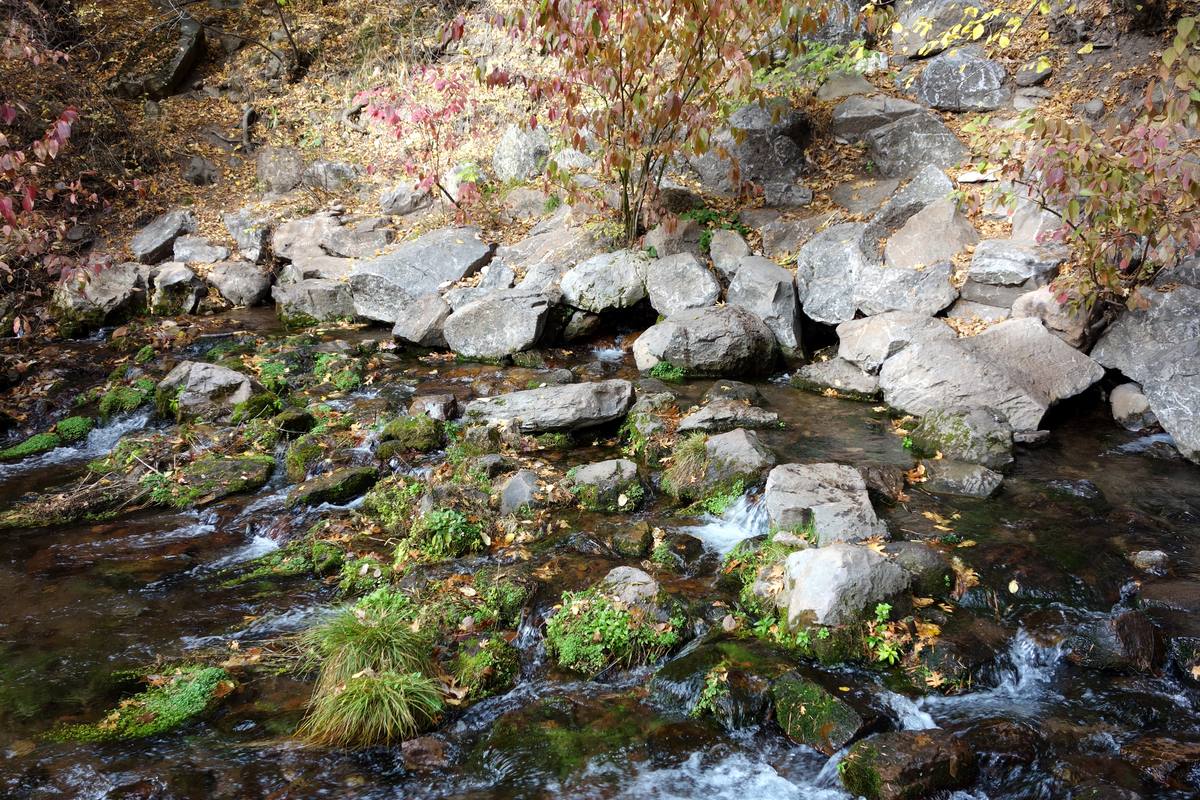
Mount Shasta spring water starts as rain, snow and glacier melt high on the mountain, soaks down into porous volcanic rock, and comes back out of the ground at springs around its base. The easiest place to watch it happen is Big Springs, the headwaters of the Upper Sacramento River, in Mt. Shasta City Park about a mile north of downtown. It's free, it's open to everyone, and you'll find people filling jugs there most days.
That water matters to us too. We brew Alua Kombucha with Mount Shasta volcanic spring water, so this is the one ingredient on our menu you can go and see coming out of a hillside.
Where does Mount Shasta spring water come from?
The Mt. Shasta Recreation and Parks District, which runs City Park, describes the water at the headwaters as beginning high on the snow-covered peaks of the mountain and traveling through underground lava tubes before it pours out into daylight.
It takes its time getting there. According to a 2009 study commissioned by California Trout, as reported by the Mount Shasta Herald, the water at Big Springs fell on the slopes of Mt. Shasta more than 50 years ago and spent those decades filtering through layers of volcanic rock.
The U.S. Geological Survey has studied springs all around the mountain. Its researchers found that springs low on the mountain have longer underground paths because their water was recharged higher up on the mountain.
Where is the headwaters of the Sacramento River?
Big Springs sits at the base of Spring Hill inside Mt. Shasta City Park, 1315 Nixon Road. From downtown, head north on Mt. Shasta Boulevard, turn left at the second Nixon Road intersection, cross the railroad tracks, and take an immediate right into the park. The Mount Shasta Trail Association suggests driving through the park, past the lower lodge buildings, to the parking for the play fields and picnic area.
At the spring you'll find a viewing patio with benches. A paved path follows the creek down through the park, and two footbridges lead to wetlands, nature trails and more springs to the north. The Trail Association rates the park trails easy, about two miles of loops with almost no climbing, and lists them as a year-round walk.
Is it really the source of the Sacramento River?
Sort of, and the park district says so itself. It calls the spring the headwaters of the Upper Sacramento River, and notes that other branches of the river reach even further into the wilderness. What's undisputed is where the water goes next. It forms Spring Creek, runs through the Mt. Shasta Fish Hatchery, joins Wagon Creek, feeds Lake Siskiyou, and drops over Box Canyon Dam into the Sacramento River on its way to Shasta Lake.
There's local history here too. The park district says Big Springs once turned a water wheel that gave the town its first electricity in 1901, a small supply used for street lights.
Can you drink the water at the headwaters?
People do, every day. Locals and travelers bring bottles and gallon jugs to fill. But a sign beside the spring says the water has not been tested and drinking it is at your own risk, and wading in the spring or creek isn't allowed. We'd pass that along as is and leave the call to you.
If you go to fill up:
- Bring wide-mouth containers. They fill faster than narrow bottles.
- Fill from the edge. The park district has spent years restoring the hillside above the spring with boulders and native plants, so stay on the patio and paths.
- Dress for cold hands. The water comes out cold all year.
How does spring water end up in our kombucha?
Kombucha is tea that's been fermented, and most of what's in the glass is water. That's why the water we brew with is a big deal to us. Alua Kombucha is brewed with Mount Shasta volcanic spring water, and our cafe is its home.
Some easy ways to try it after your walk:
- A bottle of Alua Kombucha to drink on the patio by the spring or to take on the road.
- The Telos Mothership salad, which is greens, avocado, beets, cucumber, hard boiled egg, almonds, hemp seeds and tomatoes, served with our Kombucha Vinaigrette.
- The Mystic Island Smoothie, with spinach, ginger, mango, pineapple, banana, coconut milk and Irish sea moss, if you'd rather have something cold and blended.
If you want something warm before a chilly morning at the spring, the Give it a Chai Latte is house-made chai steamed with organic oat milk. We're at 315 Chestnut Street, open 8am to 5pm, seven days a week.
Photo: "Mount Shasta Big Springs - Mount Shasta City Park" by Daderot, taken November 2013, via Wikimedia Commons, released into the public domain under CC0. Resized and compressed.
FAQ
Can you drink the water at the Mount Shasta headwaters?
Many people fill bottles there, but a sign next to the spring says the water hasn't been tested and you drink it at your own risk. Wading in the spring or creek isn't allowed.
Where is the headwaters of the Sacramento River in Mount Shasta?
At Big Springs, at the base of Spring Hill in Mt. Shasta City Park, 1315 Nixon Road, about a mile north of downtown. There's a viewing patio with benches right at the spring.
Is Mount Shasta City Park the true source of the Sacramento River?
It's the headwaters of the Upper Sacramento River. The Mt. Shasta Recreation and Parks District notes that other branches of the Sacramento start further out in the wilderness.
How old is the water at Mount Shasta's Big Springs?
A 2009 study commissioned by California Trout, as reported by the Mount Shasta Herald, found the water fell on Mt. Shasta more than 50 years before it came out at the spring.
Is Alua Kombucha made with Mount Shasta spring water?
Yes. Alua Kombucha is brewed with Mount Shasta volcanic spring water, and Alua's Thrive Bar at 315 Chestnut Street in Mount Shasta is its home.